



A practical guide to selecting PMU pigments
Choosing permanent makeup pigments may look as simple as selecting a color from a chart, but professional pigment selection involves much more than finding an attractive shade. The treatment area, the client’s natural coloring, skin undertone, existing pigment, application technique, pigment formula, and expected healed result can all influence the final appearance.
The same pigment can heal differently from one client to another. Two shades that appear similar in the bottle may also produce noticeably different results because of their color base, formulation, and interaction with the skin.
The goal, therefore, is not to find one universally “best” pigment. It is to choose PMU pigments that match the procedure, the client, the artist’s technique, and the intended healed result.
Why the Color in the Bottle Is Not the Healed Color
Permanent makeup pigments can change in appearance after they are implanted into the skin. Skin undertone, implantation depth, the healing process, aftercare, and the client’s individual skin condition can all affect how the color develops.
Immediately after a procedure, the pigment often looks darker or more saturated than the final result. Temporary redness may also make the color appear warmer. As the skin heals, the visible color usually becomes softer and may reveal a different balance of warm, cool, or neutral tones.
This is why artists should not evaluate a pigment only by its bottle color, color chart, or an image taken immediately after treatment.
Consider an eyebrow pigment that looks like a natural medium brown on a color chart. On a client with a warm undertone, it may heal as a balanced, natural brown. On a client with a cool undertone and an existing gray eyebrow tattoo, however, the same shade may appear cooler and more muted after healing.
In that situation, simply choosing a darker brown may not solve the problem. The artist first needs to evaluate the existing color and determine whether an appropriate amount of warmth is needed to create a more balanced result.
The same principle applies to lip pigments. When the natural lips are light and even in tone, the artist can often focus more directly on the desired target color. When the lips are cool, dark, or uneven, applying a light pink pigment does not necessarily produce light pink healed results. The natural lip color continues to influence what the client sees after healing.
A 2024 peer-reviewed review of permanent makeup techniques, regulation, and potential complications also highlights the importance of appropriate hygiene, aftercare, and professional product selection.
Professional pigment selection is therefore based on predicting the healed color, not merely matching the color visible in the bottle.
Organic, Inorganic, or Hybrid PMU Pigments?
Permanent makeup pigments are commonly described as organic, inorganic or mineral, and hybrid. These categories can help artists and buyers understand broad formulation differences, but the category alone does not determine whether a pigment is suitable for a specific procedure.
Formulations can differ substantially between manufacturers. Pigment concentration, carrier system, color base, fluidity, and intended application should all be considered alongside the general pigment category.
Organic Pigments
Organic pigments are often associated with brighter, more saturated color performance. They may be found in lip pigment collections and other products designed to deliver stronger color intensity. However, higher saturation does not automatically make a pigment suitable for every client or technique. Artists should still evaluate the shade’s undertone, intended treatment area, healed appearance, and expected fading behavior.

Inorganic or Mineral Pigments
Inorganic or mineral pigments are often associated with softer, more natural-looking colors. For this reason, they are commonly considered for eyebrow procedures and other treatments where a subtle result is preferred. Still, not all mineral formulas behave in the same way. One brown may have a warm base, while another may lean cool or neutral. Artists should evaluate the actual shade and formula instead of assuming that every mineral pigment will produce the same type of result.
Hybrid Pigments
Hybrid pigments combine different pigment characteristics to create a balance between color intensity, natural appearance, and application performance. They may be suitable for artists or businesses that want a versatile range covering several PMU procedures.
Buyers who need more detailed background can consult the European Commission Joint Research Centre’s final report on the safety of tattoos and permanent make-up. It provides useful ingredient, safety, and regulatory context, but should not be used to claim that one pigment category is automatically superior to another.
The important question is not whether organic, inorganic, or hybrid pigments are universally better. The better question is whether a specific formula is suitable for the intended treatment area, compatible with the artist’s technique, and capable of producing a reasonably predictable healed result. Manufacturers may also use classification terms differently, so buyers should review the product description, ingredient information, and intended use before making a decision.
Choosing Pigments for Brows, Lips, and Eyeliner
Different treatment areas have different skin characteristics, color goals, and application requirements. The same pigment-selection method should not be applied to every permanent makeup procedure.


Eyebrow Pigments: Balance Is More Important Than Darkness
When selecting eyebrow pigments, start by observing the client’s natural hair color, eyebrow hair, skin depth, undertone, existing PMU, and desired style.
For a client with light hair and fair skin, a very dark brown may make the brows look heavy or disconnected from the rest of the face. A shade close to, or slightly lighter than, the natural brow hair may create a softer result. Clients with dark hair do not automatically need black eyebrow pigment. Pure black can look too strong for many brow styles, particularly when the goal is a soft powder or natural hair-stroke effect.
Existing eyebrow pigment also changes the selection process. If an old treatment has healed red, the artist needs to consider how to balance that warmth. If it has healed gray or blue, applying a darker color without evaluating the old pigment may only hide the problem temporarily.
Technique matters as well. Machine shading often requires smooth pigment flow and controlled saturation to create an even gradient. Hair-stroke techniques may place greater emphasis on clean implantation and precise color control. A pigment that works well for one artist’s machine, needle configuration, and hand speed may not feel the same for another artist.
Lip Pigments: Evaluate the Natural Lip Color First
A common mistake in lip procedures is choosing only according to the color the client wants. The natural lip tone must be evaluated before the target color is selected.
When the lips are light and relatively even, the desired result may be easier to plan. When the lips have cool, purple, gray, dark, or uneven areas, the artist must first consider how the existing tone will interact with the implanted pigment.
Neutralization and target color are not necessarily the same step. A modifier or warm shade may be used to balance an unwanted cool tone, while the target shade represents the final color direction. Treating them as interchangeable can lead to unpredictable results.
For example, placing a cool pink directly over cool, dark lips may result in a healed color that still looks muted. Introducing appropriate warmth may help balance the existing tone, but the formula and mixing ratio should be selected for the individual client. One standard recipe should not be applied to every case.
Artists should also explain that freshly treated lips usually appear more saturated than healed lips. Setting realistic expectations helps clients understand the healing process and prevents the immediate post-procedure color from being mistaken for the final result.

Eyeliner Pigments: Intended Use Matters More Than Shade Depth
Eyeliner pigments are usually available in black, dark brown, and other deep shades. While artists may initially focus on how dark or intense a pigment looks, its intended treatment area is more important than color depth alone.
A dark eyebrow pigment should not automatically be used as an eyeliner pigment. The eye area requires careful product selection, and artists should confirm that the manufacturer identifies the pigment as suitable for the intended application.
Color choice should also support the client’s features and preferred style. Deep black may be appropriate for a defined makeup effect, while dark brown can create a softer appearance. In either case, the pigment should be selected according to its stated use and applied by a properly trained professional.
Look Beyond Color: Flow, Consistency, and Application Performance
An attractive shade is not enough if the pigment does not work well with the artist’s equipment and technique. Practical evaluation should include fluidity, concentration, pigment flow, control during application, and consistency across sessions and batches.
A fluid or water-based pigment formula may appeal to artists who prefer smooth pigment delivery and controlled machine application. However, greater fluidity does not automatically mean better performance for every procedure. Machine settings, needle configuration, hand speed, and technique all influence how a pigment behaves during treatment.
When testing PMU pigments, consider practical questions. Does the formula mix evenly before use? Does it flow consistently during machine work? Can the artist build color gradually without losing control? Does the same shade perform consistently when purchased again? Most importantly, does the healed color remain reasonably close to the planned result?
Testing on synthetic skin can help artists evaluate the initial color and handling characteristics, but synthetic skin cannot reproduce a client’s undertone, skin condition, healing response, or aftercare. It should be treated as one part of product evaluation, not as a substitute for documented healed results.
A useful professional habit is to record the pigment shade, mixing ratio, batch number, machine settings, needle configuration, client characteristics, and healed outcome. Over time, these records reveal which shades work best for particular skin tones and techniques. This type of documented experience is more reliable than memorizing one universal color formula.

How to Decide Whether a Pigment Is Suitable for Long-Term Use
A successful result from one procedure does not necessarily mean a pigment is suitable for long-term professional use. Studios, academies, distributors, and brand owners also need to consider product consistency, traceability, and documentation.
Start with the label. It should clearly identify the product name, shade, batch or lot number, net content, manufacturing or expiration information, storage instructions, and responsible manufacturer or supplier. Buyers should also look for ingredient information, intended-use guidance, and any available supporting documentation.
Buyers entering the U.S. market should review the FDA’s fact sheet on tattoos and permanent makeup and verify which federal, state, and local requirements apply to their products and services. The page should not be interpreted as FDA approval of a particular PMU pigment.
Batch consistency is particularly important. If the same shade changes noticeably between orders, artists may struggle to reproduce previous results. For training academies, inconsistent batches can produce different outcomes among students. For distributors and private-label brands, the same problem can lead to customer complaints and reduced trust.
Storage and product condition also matter. Pigments should be stored according to the manufacturer’s instructions and used within the stated period after opening, where applicable. Damaged packaging, unusual odor, unexpected changes in texture, or expired products should be treated cautiously. Some settling may occur depending on the formula, but normal settling and product deterioration are not the same.
Product sourcing and hygienic handling also matter. The CDC has documented tattoo-associated infections linked to contaminated inks and nonsterile dilution practices. This supports careful attention to manufacturing quality, packaging integrity, and proper handling; it does not imply that every fluid or water-based pigment presents the same risk.
Requirements for permanent makeup pigments vary across markets. For products intended for Europe, the European Chemicals Agency provides an overview of EU restrictions on tattoo inks and permanent make-up. Importers and private-label brands can also consult Commission Regulation (EU) 2020/2081 for the official legal text.
Broad claims such as “completely safe,” “will never change color,” or “suitable for every skin type” should be approached carefully. Professional products should be supported by clear, verifiable information rather than absolute marketing promises.

Choosing a PMU Pigment Supplier
When pigments are being purchased for long-term studio use, professional training, wholesale distribution, or a private-label product line, evaluating the supplier becomes part of evaluating the product.
A capable PMU pigment supplier should provide more than a large color selection. The supplier should be able to explain product specifications, available sizes, intended applications, storage requirements, and customization options. For a new product, requesting samples before placing a larger order allows the buyer to assess the formula, color, handling, and packaging quality.
Businesses interested in OEM or private-label PMU pigments should also confirm whether the supplier can support custom shades, bottle sizes, labels, and packaging. Minimum order quantities, sample approval procedures, production lead times, and delivery arrangements should be discussed before the order is finalized.
Custom colors should be approved through physical samples whenever possible. Screen displays, digital color charts, photography, and lighting conditions can all change how a shade appears.
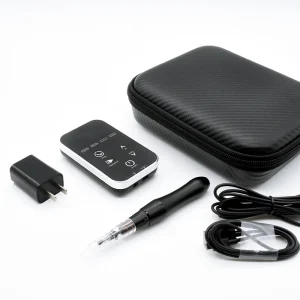
Buyers building a complete PMU product range may also benefit from a supplier that offers pigment machines, needle cartridges, pigments, and related packaging. This can simplify purchasing and improve coordination across the product line. However, a broad catalog should never replace individual product evaluation. Each product category still needs to be reviewed for quality, specifications, compatibility, and documentation.
The right long-term supplier is not necessarily the one offering the lowest unit price. Product consistency, communication, documentation, customization capabilities, and dependable delivery can be equally important to a professional PMU business.
Conclusion
Choosing permanent makeup pigments is not simply a matter of matching a desired color to a shade chart. It requires an understanding of how pigment formulation, treatment area, natural coloring, skin undertone, existing PMU, and application technique work together to influence the healed result.
Artists should begin by identifying the procedure and intended outcome, then evaluate the client’s natural features and existing color. The next step is to compare pigment undertone, formula, fluidity, intended use, and application performance. Detailed treatment and healing records can then help refine future pigment choices.
For academies, distributors, and private-label brands, the evaluation should also include labeling, batch consistency, documentation, customization options, and supplier reliability. Testing samples before placing a bulk order can reduce purchasing risk and support a more consistent, professional PMU pigment range.

